

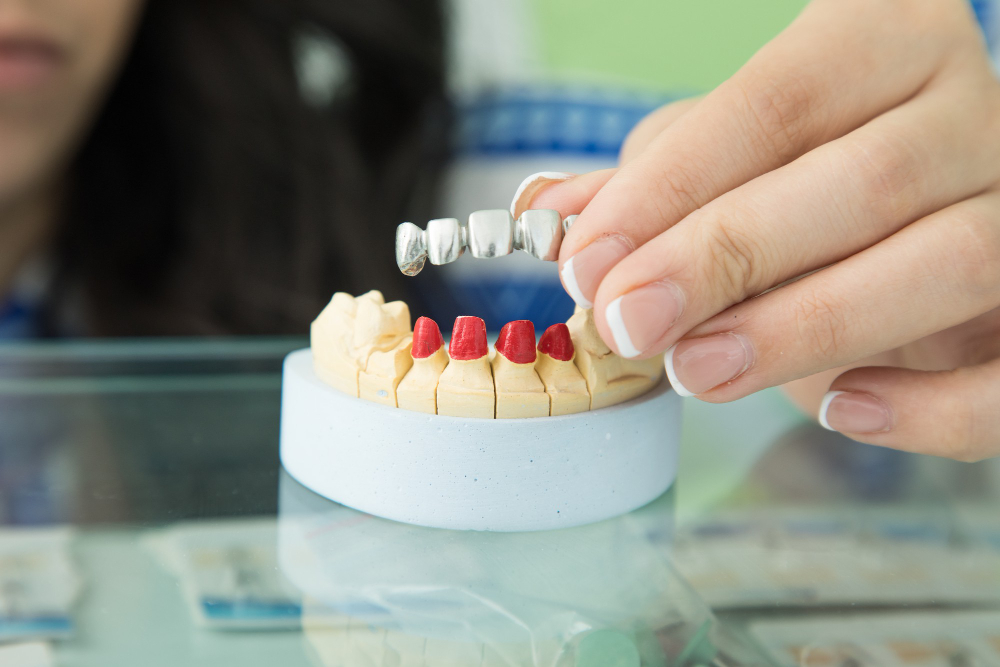
What Are Dental Bridges?
Dental bridges are a common way to replace missing teeth. They fill the gap where one or more teeth are missing. Usually, a dental bridge uses the teeth on either side of the gap for support. These teeth are called abutment teeth. The bridge holds a false tooth, called a pontic, in place. Many people choose dental bridges because they look and feel natural. In fact, dental bridges can help restore your smile and make chewing easier.
How Do Dental Bridges Work?
First, your dentist prepares the teeth next to the gap. These teeth will hold the bridge. Then, the dentist takes a mold of your mouth. This helps create a bridge that fits well. After that, a dental lab makes the bridge. Once it is ready, your dentist places it in your mouth and checks the fit. If everything feels right, the bridge is cemented in place. As a result, you can eat and speak more comfortably.
Dental Bridges vs. Dental Implants: Key Differences
When choosing between dental bridges and dental implants, it helps to know the main differences. Both options replace missing teeth, but they work in different ways.
Therefore, your dentist will help you decide which option fits your needs best.
Pros and Cons of Dental Bridges
Like any dental treatment, dental bridges have advantages and disadvantages. Knowing these can help you make an informed choice.
Who Is a Good Candidate for Dental Bridges?
Not everyone is a good fit for dental bridges. However, many people can benefit from them. You may be a good candidate if:
On the other hand, if your nearby teeth are weak or decayed, your dentist may suggest another option.
Procedure and Recovery
The dental bridge procedure is simple and safe. First, your dentist numbs the area. Then, they shape the nearby teeth. After that, a mold is taken. You may get a temporary bridge while the final one is made. Once the permanent bridge is ready, your dentist cements it in place. Recovery is usually quick. Most people return to normal eating within a few days. However, you may feel mild soreness at first.
Cost and Longevity
Dental bridges cost less than dental implants in most cases. The price can vary based on the type of bridge and your location. For example, dental bridges in large cities may cost more. On average, a dental bridge lasts 5 to 15 years. With good care, some bridges last even longer. Still, implants often last a lifetime, but they cost more upfront.
Prevention and Oral Care Tips
Proper care helps your dental bridge last longer. Here are some tips:
As a result, you can keep your bridge and natural teeth healthy.
Frequently Asked Questions
Consult a qualified dentist to determine the best tooth replacement option for your needs.